Creating a Bird Bath That Birds Can Actually Use
Choose a usable basin, a safe approach, and a cleaning routine that keeps garden water genuinely useful to visiting birds.
Updated
A shallow, stable basin with clean water and an open approach is more useful than an elaborate fountain that is difficult to maintain.
Water that remains useful after the first visit
The prettiest bird bath in a garden can be the least useful if its sides are slippery or its bowl is difficult to lift. Water provision is an ongoing task rather than a decoration placed once and forgotten. Look at the basin from the perspective of a small visitor: there must be a secure place to stand, a way to leave quickly, and clean water at a usable depth. Those details deserve attention before a fountain or ornamental pedestal.
Choose a shallow profile
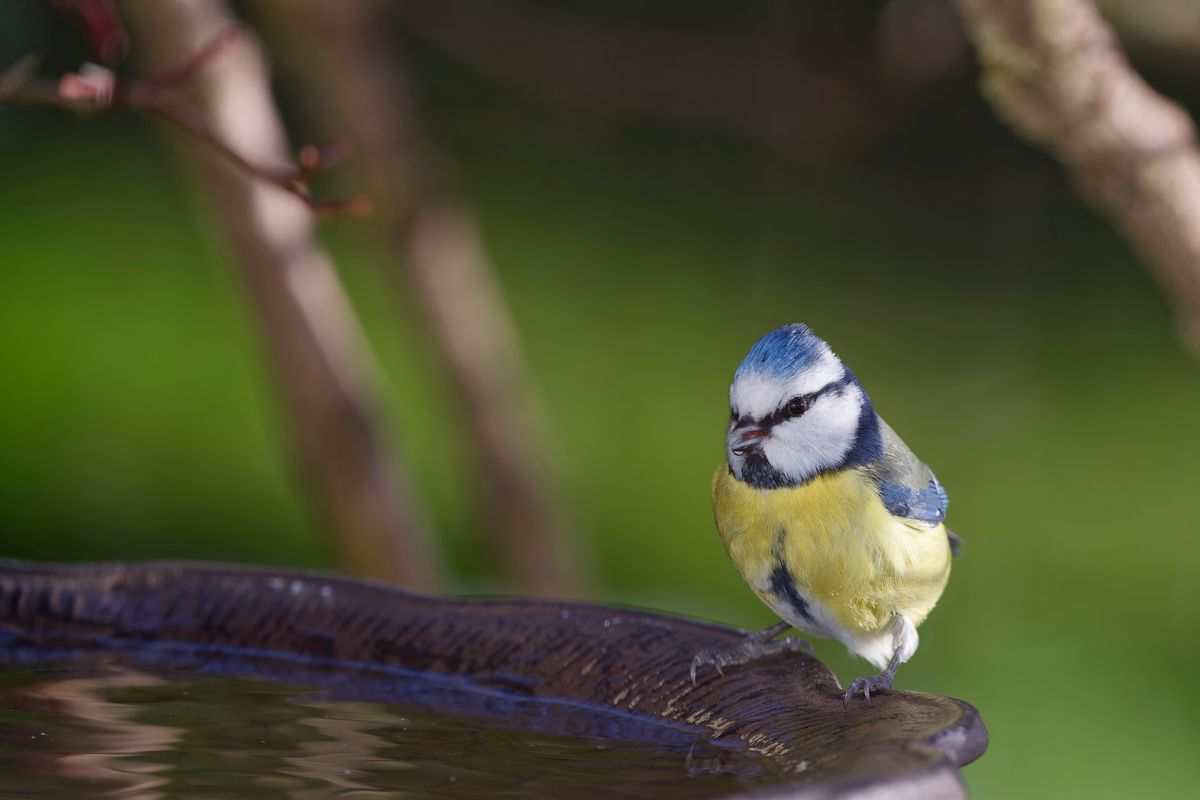
A gently sloping basin lets small birds enter without stepping straight into deep water. Texture matters because polished ceramic can be slippery when wet. Use a rough, stable shallow dish with secure footholds and a clear exit. Depth and grip deserve attention before decorative features or pump settings.
A wide rim is not a substitute for a usable interior. Birds must be able to reach the water without an awkward leap from a slippery edge, and the shallow area should remain available as the level falls. Check a bowl with a ruler rather than estimating depth from above. If a basin has a deep central section, do not assume a few pebbles make the whole design suitable. A shallow container with a stable profile is often easier to supervise. Avoid porous decorative fillers that trap dirt or cannot be scrubbed, and make sure any added foothold cannot shift when the basin is emptied.
Place the water thoughtfully
Birds need a view of approaching danger, while nearby vegetation gives them a place to pause. Dense cover touching the rim can conceal a hunting cat. Set the basin where you can inspect the approach from a bird's height. A sheltered location should still offer room to see and leave.
The best position balances several competing needs. Cover some distance away can provide a place to wait, while an open immediate edge helps birds notice approaching danger. Consider where a cat could crouch and where a startled bird would fly. Reflective glass in that direction needs attention even if the basin itself is well designed. Also consider your own route with a full watering can or an emptied bowl. If access crosses a slippery slope, you may eventually avoid the task. A convenient, quiet position with safe approaches is more useful than an idealized location that proves difficult to clean or inspect.
Make cleaning part of the design
A heavy bowl that cannot be emptied easily often stays dirty. A removable basin makes fresh water and regular scrubbing much more realistic. Choose a basin you can lift safely and keep a dedicated outdoor brush nearby. Convenient maintenance is a welfare feature rather than an optional extra.
Choose cleaning materials according to the basin and the relevant wildlife guidance. Begin by removing debris, then scrub the surface and rinse thoroughly. Follow any product instructions rather than improvising a stronger mixture. Dedicated equipment should stay outside and away from household food preparation areas. Empty dirty water in an appropriate place where it will not run across a path or into another animal's drinking bowl. Check cracks and rough damaged edges while the bowl is empty. A cracked basin can become difficult to clean and may need replacement. Frequent fresh water is easier to provide when the entire process takes only a few uncomplicated steps.
Keep water moving gently
A quiet drip may help birds notice water, but a forceful jet can make a shallow basin awkward. Pumps also add surfaces where debris can accumulate. Begin with still water and add only a modest movement after the basic arrangement works. Movement does not replace changing the water or cleaning the equipment.
A pump adds a separate maintenance task: its intake can catch plant material, and tubing or inaccessible chambers can hold deposits. Follow the manufacturer's instructions for electrical safety and cleaning. Position the flow so that it does not sweep across every shallow foothold. If the only calm part of the basin dries out first, the arrangement needs adjustment. Test for splashing too; continual loss can leave the bowl unexpectedly low. A solar-powered feature may operate intermittently, so assess the basin when the pump is stopped as well as when it is running. Birds should retain safe access regardless of whether the decorative feature is active.
Manage hot weather
A small dark container can warm quickly in strong sun. Evaporation also leaves less usable depth and concentrates dirt around the water line. Check the basin during the warmest part of the day and refresh it when needed. Do not judge afternoon conditions from an early morning visit.
During a hot spell, inspect more than the water level. The basin's material, color, sun exposure, and surrounding reflected heat influence conditions. Move a lightweight bowl only if the new position is stable and does not introduce hidden approaches for predators. Fresh water should be supplied in a way that does not repeatedly disturb birds already using the site. If evaporation is rapid, increase the frequency of checks rather than deepening a shallow basin indiscriminately. Avoid placing the feature beside chemicals or treated runoff. A source that is convenient for birds must also remain protected from contamination associated with ordinary gardening and household activities.
Plan for cold conditions
Ice removes access even when water remains underneath. Pouring boiling water onto a frozen basin can crack the material and create an unsafe surface. Replace icy water with fresh unfrozen water using a method suitable for the basin. Never add salt, antifreeze, or other chemicals to keep a bird bath open.
Cold-weather care depends on the material and the maintenance route. Some ceramic or stone containers are vulnerable to frost damage, and ice can make them heavier and awkward to handle. Read the maker's guidance before leaving a decorative basin outdoors through repeated freeze-thaw cycles. A simpler frost-suitable spare can make winter maintenance easier. If an electrical bird-bath heater is used, it must be designed for that purpose, installed safely, and maintained as instructed. Do not adapt household heating equipment or leave electrical connections exposed to splashes. Whatever method is chosen, continue checking cleanliness; keeping water unfrozen does not keep it clean.
Read the visitors' behavior
Birds often perch nearby before drinking, and a new object may be ignored initially. Repeated alarm calls or sudden departures can reveal a problem with the location. Observe quietly from indoors and note how birds approach and leave. Judge success by safe access and cleanliness rather than the number of visitors.
Watch a sequence rather than one moment. A bird may scan from a nearby branch, approach the rim, drink, and return to cover. Repeated aborted approaches may suggest disturbance, while a quiet empty interval may simply reflect normal patterns. Avoid moving the bath after every uneventful day. Check the physical basics first, then allow time for birds to become familiar with it. If illness appears among visitors, consult current wildlife-health advice about shared water sources. Do not add products intended to disinfect water while birds are drinking. Maintenance should happen with the basin emptied and should leave no unsafe residue on the surfaces birds use.
A basin beside the patio
Suppose the most convenient place for a bird bath is beside a busy patio door. The location is easy for you to reach, but that advantage must be balanced against frequent movement, reflective glass, and any pet access. Before filling the bowl, stand outside and check the view toward the door. Treat hazardous glass, keep pets separated, and consider moving the basin a little farther from the main route if people repeatedly interrupt visits. A stable location with fewer disturbances may work better than the one nearest the tap.
The first birds may use the rim without entering the water. That is useful information, not a reason to deepen the bowl. Check whether the surface is slippery, whether the approach feels enclosed, and whether the basin rocks when touched. A secure foothold and an obvious exit are more useful corrections than a dramatic fountain. If you add stones, they must remain cleanable and firmly placed; loose piles that shift under a bird defeat the purpose of improving grip.
During the first week, emptying the basin should become as familiar as watering a pot. Look at the bottom after tipping the water out. A slippery film or debris around the edge means the surface needs attention even if the water appeared clear from indoors. Keep cleaning tools outside and away from household food equipment. Refreshing the water without inspecting the bowl can miss the places where dirt collects. Choose a manageable routine before adding a second water feature.
Photographs can help you compare shade at different times, but avoid turning every visit into a close camera session. Watch from a quiet position and note whether birds have an unobstructed departure route. If several birds crowd the same edge, consider whether the available space remains appropriate. More visitors are not automatically evidence of a better design. A bird bath succeeds when water remains usable, the location is safe, and maintenance is easy enough to continue in ordinary weather as well as during heat.
When a bird bath is not the right feature
A water feature may be unsuitable if it cannot be emptied safely, if pets cannot be separated, or if the only available position directs birds toward hazardous glass. In that case, improve the underlying setting first. Do not feel obliged to keep a decorative basin simply because it is already installed. A clean accessible replacement in a better position can be considered later. Meanwhile, suitable planting and reduced disturbance remain useful contributions. Wildlife care should fit the space rather than require constant workarounds for a design that cannot be made practical.
If nobody can maintain the bowl during an absence, arrange a knowledgeable helper or leave it empty rather than allowing dirty stagnant water to remain. Explain the whole routine, including cleaning, not just refilling. Ask the helper to note unusual observations and provide the appropriate local wildlife contact if needed. Keep the task simple enough to perform reliably. An elaborate pump system can make supervision harder when its usual owner is away, whereas a removable shallow dish may be easier to manage.
Review the basin after storms, construction, or garden chemical use nearby. Debris and runoff can change conditions abruptly. Empty and inspect it when contamination is possible, following relevant product and wildlife guidance rather than assuming dilution makes everything safe. Keep chemicals securely stored away from wildlife equipment. The same attention applies to new paint or sealant used on decorative features: verify suitability before birds have access. A bird bath belongs in the normal household safety and maintenance plan, not outside it because it is outdoors.
Further reading
Use these independent resources to explore the subject and check guidance for your location.