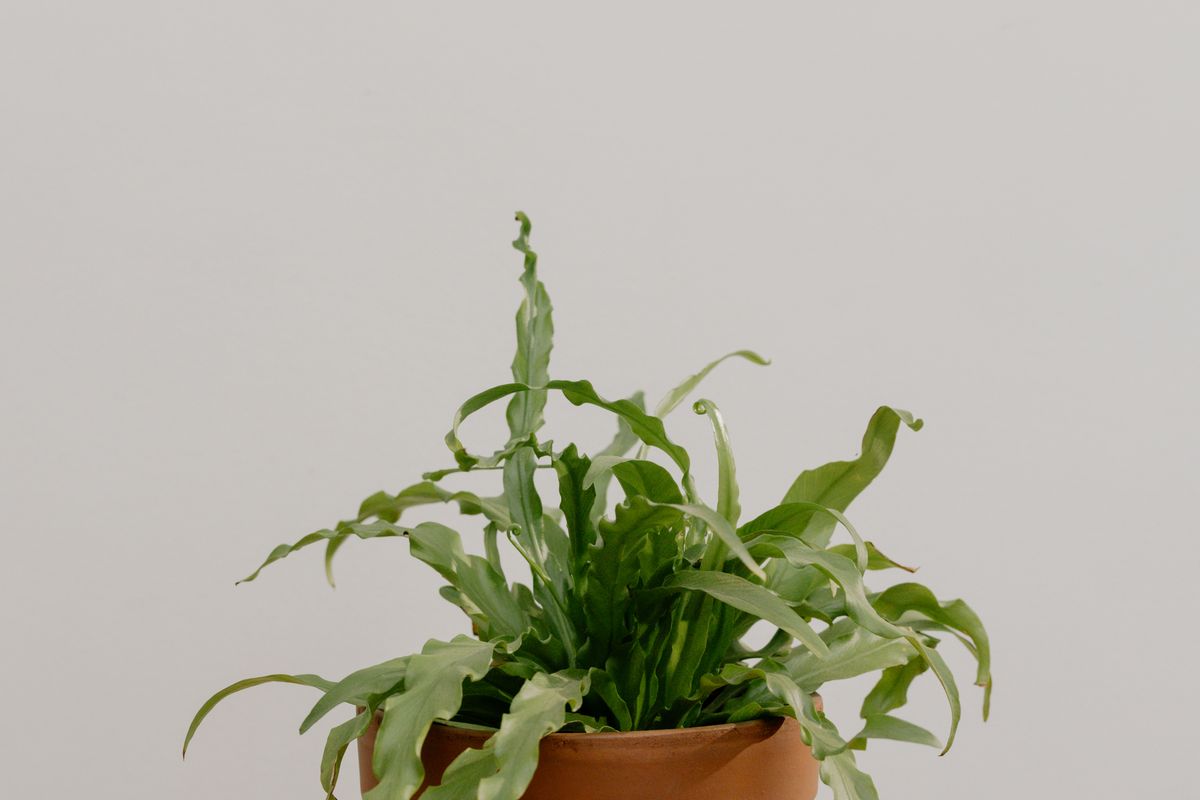
Keeping a Boston Fern Comfortable Indoors
Balance moisture, usable light, humidity, and airflow for a Boston fern, while investigating brown fronds without overwatering.
Updated
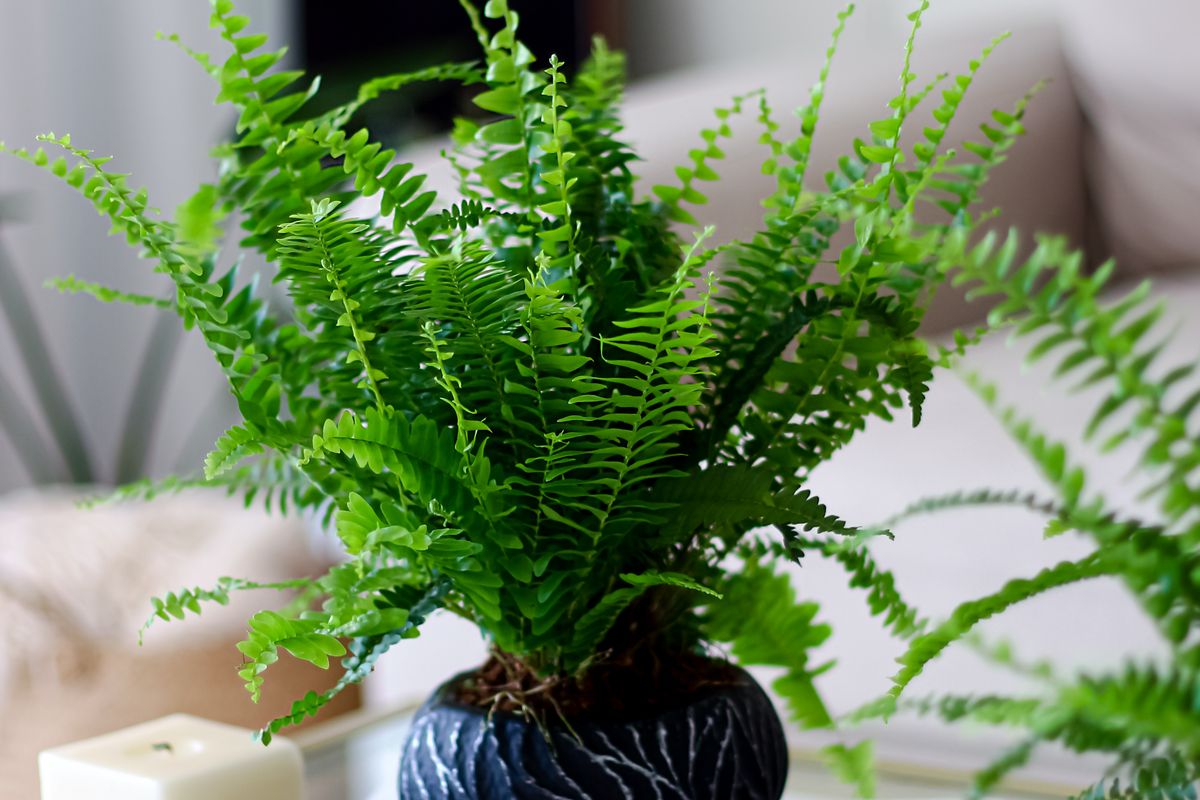
Water when the surface begins to dry, keeping the root ball evenly moist. Drain fully and use a room humidifier if the air is consistently very dry.
A fern is not a decoration that happens to need water
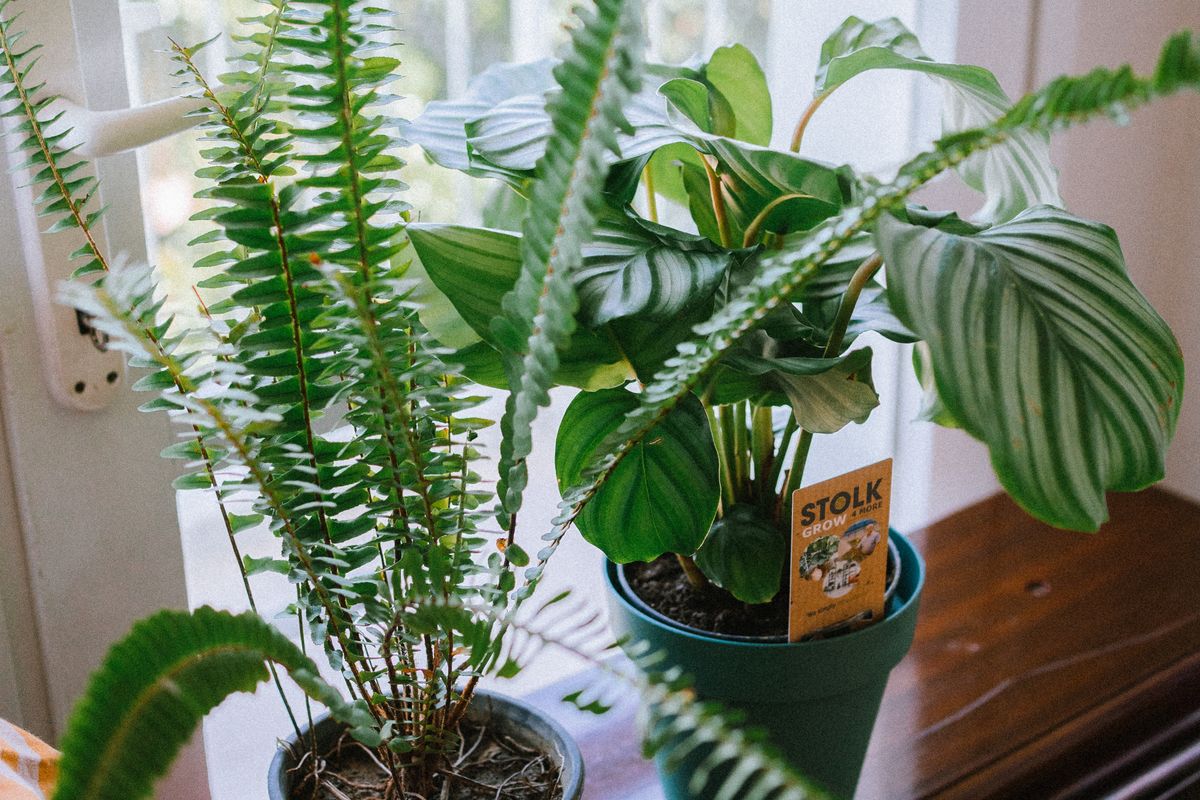
Boston ferns make a soft dense shape from many slender fronds and fine roots. The same structure that gives them their appeal can make them unforgiving of repeated drying. At the other extreme, a root ball left in stagnant water can deteriorate even while the surrounding air is dry.
Separate those two needs from the start. Root moisture and air humidity are related to plant comfort, but they are not interchangeable. Misting the fronds does not rehydrate a dry root ball, and saturating the pot does not solve a room’s dry heated air.
Choose a position you can reach easily. A hanging fern may look beautiful high above a window, but it becomes difficult to check moisture and empty runoff. A slightly lower accessible position often produces a healthier plant simply because routine care is more accurate.
Find bright light without harsh exposure
Provide useful indirect daylight and avoid an abrupt move into strong direct sun. Fern fronds can scorch when exposed to intense rays, particularly close to hot glass. A position receiving gentle light with shelter from the hottest period is a better starting point than an exposed afternoon sill.
Deep shade is not the opposite solution. A fern in a dim interior position may grow weakly and use water slowly, making moisture management more difficult. Look at the actual light reaching the fronds rather than assuming every shaded bathroom is suitable.
Observe the position over a day. Window direction, nearby buildings and season all affect the result. A room that was comfortable in spring may become hot when summer sun reaches farther across the shelf, or much dimmer when nearby trees develop a full canopy.
Keep moisture even, not stagnant
Check the surface of the mix and lift the pot when practical. Water when it begins to dry rather than waiting for the entire root ball to become light and crisp. Fine roots can suffer when a fern is allowed to dry severely again and again.
Apply water gently and thoroughly, then allow excess to drain. Empty the saucer or decorative outer pot. The goal is an evenly moist root environment with air available, not a permanent reservoir touching the base of the pot.
A dense canopy can hide the mix, so part fronds carefully rather than pouring blindly into the center. Water that runs over leaves and out of the pot may leave a dry section inside. Check that the root ball, not merely the foliage, has received the water.
Why a misting bottle is not a full humidity plan
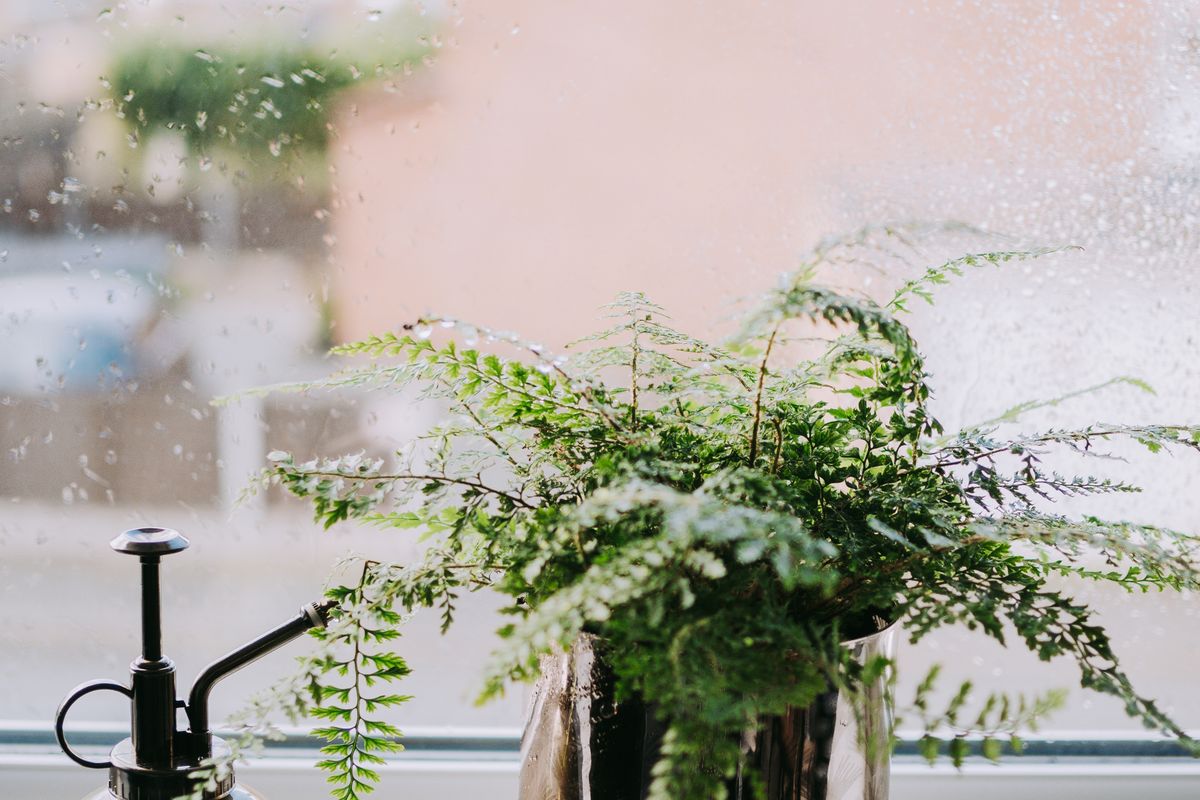
A spray briefly wets leaf surfaces and nearby air, but its effect is usually short-lived in an ordinary ventilated room. Repeated misting can leave furniture wet without correcting persistent low humidity. It should not distract from checking root moisture or locating the fern away from heater airflow.
A room humidifier can raise humidity more consistently when used appropriately. Follow cleaning and maintenance instructions, keep it away from electrical hazards and avoid creating persistently damp walls. A hygrometer helps you see the room’s normal range rather than relying on how dry it feels.
Grouping plants may create a modest local effect, but crowding fronds tightly can reduce air movement and make inspection difficult. Leave space around the fern. A comfortable environment includes useful light and ventilation as well as moisture in the air.
Heating season changes the balance
A fern beside a radiator may experience warm dry airflow even when the rest of the room feels comfortable. Move it away from direct heater outlets and check whether hot air rises beneath a shelf or hanging basket. The problem may be highly local.
At the same time, shorter daylight can slow growth and water use. This creates a confusing combination: dry air around fronds while the compost remains wet longer. Adding extra water to compensate for brown tips may worsen the root conditions.
Track air and soil separately for a few weeks. Note when heating runs, whether the pot remains heavy and where new browning appears. A small adjustment in position can be more useful than an increasingly complicated routine of misting and emergency watering.
Brown tips need interpretation
Crisp tips may follow drying, low humidity, mineral accumulation or other stress. One damaged frond does not identify the cause. Check the recent sequence: did the pot become very dry, did heating begin, or has water been collecting inside the outer container?
Existing brown tissue will not become green again. Trim a fully dead frond near its base with clean scissors, avoiding healthy developing growth in the center. Do not remove most of the green canopy simply because the tips are imperfect.
Judge improvement through the absence of fresh damage and the condition of new fronds. A fern recovering from a difficult period may look uneven for a while. Repeatedly changing its light, pot and fertilizer all at once makes that recovery harder to assess.
The dense center deserves a gentle look
Part mature fronds carefully and inspect the crown and pot surface. Fallen material can collect where it is difficult to see, and a dense canopy can conceal pests or poor watering coverage. Avoid pulling at tightly curled young fronds while they are developing.
Remove loose dead material and inspect both sides of older fronds. Fine webbing, sticky residue or unusual attached structures deserve closer identification. Do not apply a treatment merely because a plant looks tired; fern foliage can be sensitive to unsuitable products.
If a pest problem is confirmed, follow guidance appropriate to the species and the product label. Test where advised and keep the plant separate from others when practical. Good access is one reason not to wedge a large fern tightly between neighboring pots.
Repot when the root ball really needs it
A crowded fern may dry rapidly or become difficult to water evenly. Inspect the root ball before assuming that every fading frond means it needs a larger pot. Low light, dry air and irregular watering remain possible explanations.
When repotting is justified, use a suitable moisture-retentive but draining mix and a modest increase in size. Keep the crown at its previous level. Packing fresh compost tightly around it can reduce the air spaces roots need.
Learn the new drying pattern afterwards. Fresh mix around the old root ball can hold moisture longer, so the previous interval may no longer fit. Keep conditions stable while the plant settles rather than combining repotting with a move into a much hotter or darker position.
Feed modestly during useful growth
Use a suitable fertilizer according to its label when the fern is growing actively. Avoid feeding as a rescue response to a dry or persistently wet root ball. Nutrients do not replace water balance, useful light or healthy roots.
Fresh potting mixes may contain nutrients already, so read the information before adding more. If a crust develops on the mix or pot, consider fertilizer use and water chemistry together. Increasing the dose because fronds look weak can compound a problem.
In darker or cooler periods, growth may slow and the feeding routine should reflect that. A fern kept in consistently warm suitable light may behave differently from one on a seasonal windowsill. Let the plant’s conditions guide the routine rather than relying only on the month.
Make the arrangement easy to maintain
Choose a stable washable surface and protect nearby furniture from drips. If the fern hangs, use a properly rated secure fixing and a pot you can safely reach. A full watered basket is heavier than an empty decorative one.
Keep electrical humidity equipment where it cannot be splashed during watering. Maintain clear access to plugs and follow manufacturer guidance. Do not place a humidifier so that one side of the fern remains constantly wet while the rest of the room is unchanged.
The best routine is steady rather than elaborate: useful indirect light, even root moisture, drainage and a room environment that avoids extreme dryness. Inspect often enough to understand the plant, but leave healthy fronds alone. New green growth is the most rewarding sign that the balance is working.
Compare two kinds of drying
If frond tips crisp while the pot remains heavy and damp, inspect the room environment and root health rather than adding water automatically. Dry moving air may affect foliage while the roots have more than enough moisture. A radiator directly below the plant is a useful clue.
If the pot is light and the mix has pulled away from its sides, root drought is more likely to be part of the problem. Rehydrate gently and improve the checking routine. Repeated severe drying can damage fine roots, so the return of water does not guarantee that every frond will recover.
These two situations can produce similar brown tips but call for different responses. Keeping a short note of pot weight, surface moisture and heating conditions helps you distinguish them. The goal is to correct the source rather than chase the same visible symptom with the same treatment every time.
A holiday plan should be tested in advance
Before leaving, ask a helper to inspect moisture rather than pour a fixed amount on a fixed day. Show them how the pot feels and where drainage collects. If using any self-watering arrangement, test it while you are still home and confirm that it suits the plant and mix. An unfamiliar device introduced at departure can create a problem nobody notices until your return.
Further reading
Use these independent resources to explore the subject and check guidance for your location.