Growing Zinnias for a Long Season of Color
Plan warmth, sun, spacing, and cutting for productive zinnias, with practical ways to encourage continued flowering through the growing season.
Updated
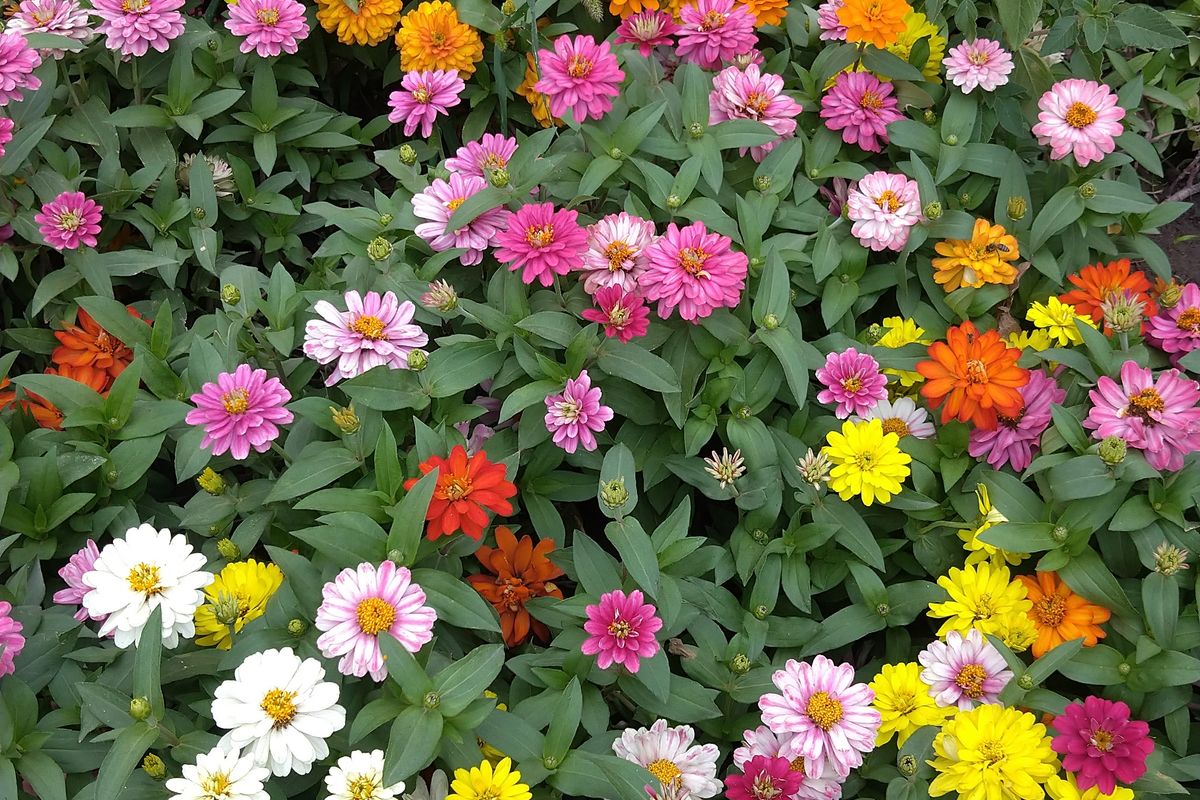
Sow at the packet depth, thin seedlings to the variety’s recommended spacing and water at soil level. Pinch young plants only when they are strong enough to branch.
Choose warmth before choosing colors
Zinnias are warm-season annuals that give a generous display when the site suits them. Their needs begin with sun and warmth rather than a complicated feeding program. Cold wet soil can leave seedlings struggling before the flowering season has properly begun.
Check the local frost outlook and seed-packet guidance before sowing or planting outside. A warm afternoon does not prove that nights and soil are ready. If you start plants under cover, plan where they will grow after germination; a tray can sprout successfully and then become weak on a dim windowsill.
Read the variety description for mature size
A compact bedding zinnia and a tall cutting variety create different plants. Read the expected height, spread and flower form before deciding where they belong. A low container display may need compact branching plants, while long vase stems require a different selection.
Flower form also affects how the planting functions. Open forms can provide easier access for visiting insects than very dense double flowers. You can combine ornamental preferences with a practical mix rather than expecting every variety to serve every purpose. Keep labels so successful choices can be repeated next season.
Prepare an open sunny place
Choose a site with useful sun and enough room for air to move between mature plants. Remove competing weeds and prepare soil that drains without becoming excessively dry. Zinnias do not benefit from a permanently saturated root zone.
Plan access before sowing. A narrow path or reachable bed edge lets you water, cut flowers and remove damaged material without stepping among stems. If tall plants will need support, install it while the bed is open. Pushing stakes through a mature crowded planting is more awkward and risks roots and stems.
Direct sowing keeps the process simple
Where the season is suitable, direct sowing avoids the disturbance of transplanting. Follow the packet depth and spacing, label the row and keep the seed area evenly moist while germination begins. Use a gentle watering method that does not wash seeds into a pile.
Once seedlings are established, thin them to the recommended spacing for the variety. Keeping every seedling can feel economical, but crowded plants compete for light, water and root space. Thinning is part of growing a good display, not an admission that the sowing failed. Remove unwanted seedlings carefully so neighboring roots remain secure.
Transplant young plants with a plan
If starting under cover, use containers that allow seedlings to be moved without excessive root disturbance. Give them useful light promptly after germination and avoid keeping them too long in a crowded tray. Sturdy growth is more useful than maximum height.
Harden plants off gradually before permanent outdoor planting. Expose them to outside conditions in stages while protecting them from cold, strong wind and sudden intense sun. Water before planting when needed, set them at an appropriate depth and settle soil gently around the root ball. A sheltered start helps them resume growth without unnecessary stress.
Water the roots rather than the flowers
Check the soil below the surface and water when the root zone needs it. Newly planted seedlings have limited roots and may need closer attention than established plants. Once roots spread, a thorough watering is usually more useful than a brief daily splash over the foliage.
Apply water at soil level where practical. Keeping leaves unnecessarily wet, especially in a crowded planting, can contribute to disease-friendly conditions. Irrigation timing and local climate matter, so focus on reducing prolonged leaf wetness while ensuring roots receive enough moisture. Do not withhold needed root water merely to keep every leaf dry.
Pinching is an optional shaping decision
Removing the growing tip from a strong young plant can encourage branching in suitable varieties. It may also delay the first flowers while the plant develops side shoots. Decide whether that trade-off suits your goal rather than pinching every seedling automatically.
Wait until the plant has enough healthy growth to support the change and use clean tools. Avoid combining pinching with drought stress, transplant shock and poor light. A small weak seedling does not become sturdy simply because its top is removed. If you are unsure, compare a few plants rather than applying an unfamiliar technique to the whole batch.
Cut flowers when the stem is ready
A freshly opened flower is not always ready for the vase. Check the stem just below the bloom: a very flexible neck may indicate that it is too immature. A firmer stem is a more useful harvest clue, though varieties differ.
Cut above a suitable leaf junction so the remaining plant can produce new growth. Place stems promptly in a clean water container and remove leaves that would sit below the vase water. Keep cutting buckets clean. Harvesting a few stems regularly can maintain the display better than allowing every flower to develop seed before taking a large cut.
Deadhead for the display you want
Remove spent blooms if continued flowering is the priority. Trace the stem to a healthy branching point rather than leaving a long bare stalk. Work carefully around adjacent unopened buds so a quick tidy does not remove the next display.
You can also leave selected healthy flowers to mature for seed where that suits the garden. This changes the plant’s use of resources and the appearance of the bed. Mark chosen seed heads so they are not removed during routine cutting. Saved seed from hybrids may not produce plants identical to the parent, which is worth knowing before planning next year around a precise color.
Watch leaves without reaching for a spray first
Powdery coatings, leaf spots and thinning lower foliage call for inspection of the growing conditions as well as identification of the problem. Crowding, prolonged leaf wetness and declining seasonal vigor can all contribute. Remove clearly affected debris and maintain sensible spacing.
Do not apply an improvised household mixture to the entire bed. Identify the issue and use reliable local guidance before choosing a product. Follow labels and protect visiting insects. Where disease becomes severe late in the season, removing tired plants and planning a better arrangement next year may be more practical than repeatedly treating declining foliage.
Succession sowing needs enough season left
A later sowing can provide fresher plants and extend the display, but only if there is sufficient warmth and time before cold conditions return. Read the expected development time and work backward from your local season. A calendar copied from another region may be misleading.
Keep later batches labeled and avoid planting them so close to older plants that they begin life in shade. Prepare the next space before the first plants become exhausted. In a short growing season, one well-managed batch may be a better use of space than several late batches that never reach flowering.
Finish the season with useful observations
When the display ends, note which varieties stayed upright, flowered well and suited your cutting or bedding plans. Record the sowing date and any major disease or watering problems. These details are more useful than remembering only the most photogenic week.
Clear diseased material through an appropriate local route and clean supports and tools before storage. Do not assume a small cool compost pile will reliably destroy every pathogen. If saving healthy seed, dry and label it properly, keep it away from children and pets and accept that next year’s plants may bring some variation.
A container planting needs its own scale
Zinnias can work in pots when the variety and container are matched. A compact bedding type is easier to accommodate than a tall cutting variety in a narrow lightweight pot. Use drainage holes and an appropriate container mix rather than filling the vessel with garden soil.
Give each plant enough room to develop. A pot crowded for immediate impact can become difficult to water evenly as roots fill it. Check moisture below the surface and remember that a small container exposed to sun and wind may dry faster than a nearby bed. If stems become heavy with blooms, a discreet support installed early is easier to manage than a late rescue.
Preserve a useful balance of flowers
A cutting patch can still feed the garden visually and support visiting insects. Harvest from different plants rather than stripping every open flower from one area. Leave some blooms in the bed and remove only those whose stems or condition suit the vase.
If long stems are the priority, choose the variety accordingly and cut to an appropriate branching point. Shortening only the flower neck can leave an unattractive stalk and little useful vase length. Conversely, cutting far down a young plant can remove too much productive foliage. Assess the whole stem before making the cut, and keep the remaining framework capable of supporting new shoots.
What a stretched seedling is telling you
A seedling with a long thin stem leaning toward the window needs an assessment of light and growing conditions. Extra feed cannot make up for a poor light position. Move toward more useful light gradually and make sure the tray is not overcrowded.
Do not bury the problem beneath repeated early sowings. If every batch becomes weak before outdoor planting is possible, start later or provide a genuinely suitable protected growing setup. Strong seedlings planted at the right local stage often establish better than much older plants that have spent weeks struggling indoors. Record the timing so the same avoidable mismatch does not repeat next season.
When supporting a tall variety, keep ties loose enough for stems to thicken. Check them after wind rather than waiting for a visible bend. A support should prevent damage without gathering the entire plant into a dense bundle that blocks airflow and makes flower cutting difficult.
Further reading
Use these independent resources to explore the subject and check guidance for your location.